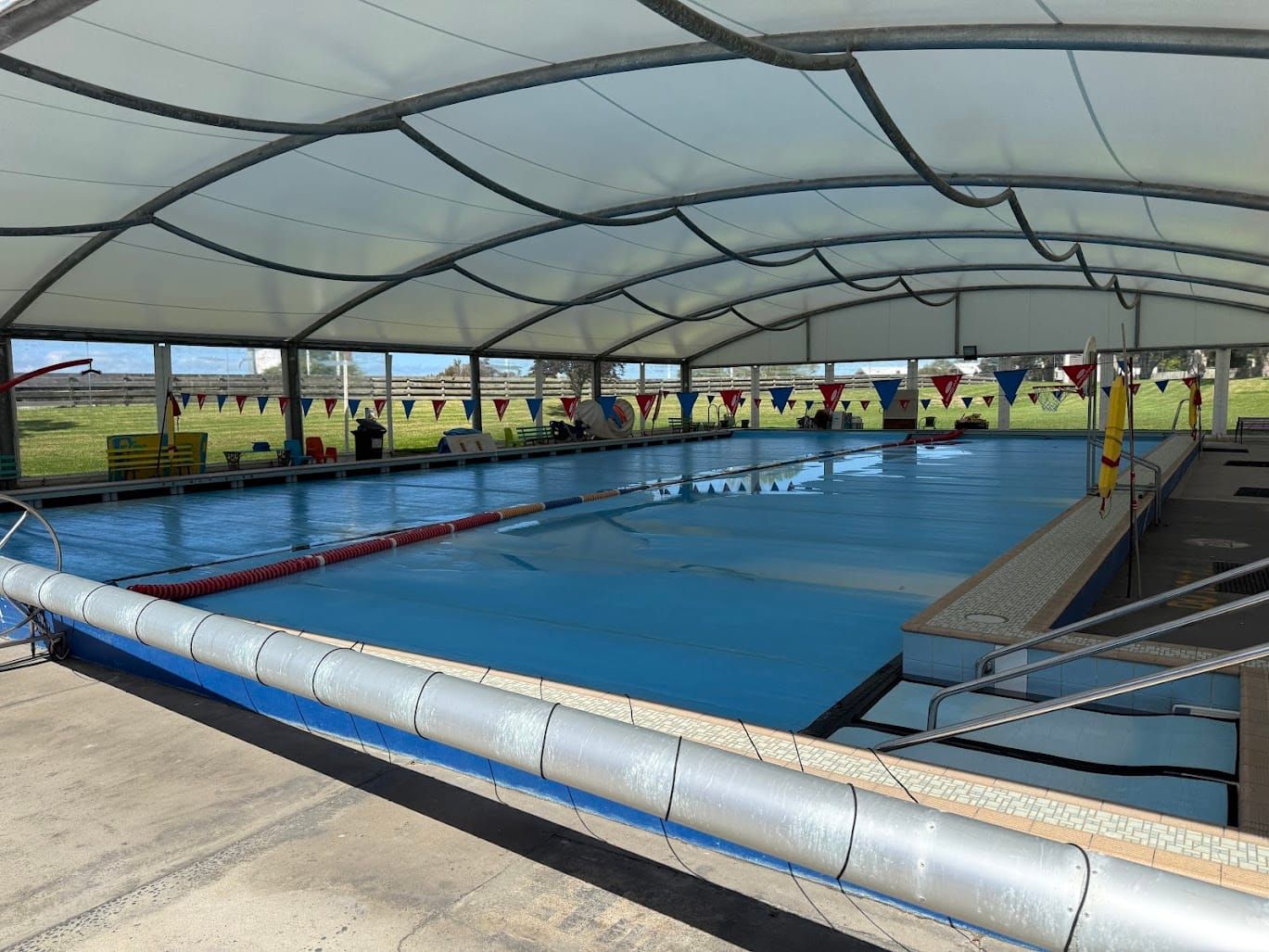
South Gippsland’s six public pools face an estimated $41 million funding gap over the next 15 years. Council has not made a decision to close any individual pool, but closure is an option on the table. For communities that want to keep their local pool, the challenge is to show its value and make the strongest possible case for its future.
Korumburra residents are taking that challenge beyond a survey. The Martin Carlson Foundation is opposing the potential loss of the town’s outdoor pool and advocating better management, more effective opening hours, increased use and programs for younger and older residents. It has also supported young people to gain lifeguard and first-aid skills, linking the pool to water safety and local employment. Meanwhile, the Korumburra Community Development Association’s Blue Fish Project encourages residents to visibly show their support for keeping the town’s pools.
The message for Foster and Toora is clear: making a case for a pool means more than objecting to its possible closure. It means showing how the facility serves the community and what could be done to attract more people through the gates.
Conversations with Foster and Toora pool operators Carol and Eddie at the end of the first fortnight of the 2026/27 season suggest cost pressures are affecting some families, while others may simply need encouragement to return after years away. “Families are coming, not as many as usual, and they’re paying as they come rather than buying a season membership,” Ernie told the PCN.
“It’s a bit of a false economy but with fuel and food so expensive now, it’s little wonder”, added Carol”, “and the aerobics for the older community has died off a bit, I don’t know why”, she continued. Both agreed though that older members of the community could return when the cold snap ends.
Pools not only offer swimming lessons, exercise, water confidence but also social connection, as well as an affordable family outing, the couple said.
At Toora, families can help keep a visit affordable by bringing their own sandwiches, snacks and drinks rather than relying on kiosk purchases. “We don’t mind, so long as they come”, urged Ernie.
While both of them accepted the pool has competing activities parents need to ferry their children to, they each lamented the scourge of gaming and social media, especially amongst the young.
For older residents, warm-water exercise and social contact can also be important reasons to visit. These are practical opportunities to build participation, although greater attendance alone cannot guarantee a pool’s future.
Council says feedback will be considered alongside asset condition, visitation, operating and maintenance costs, future capital needs, accessibility, risk and the Shire’s wider financial priorities. A popular pool is not automatically a financially sustainable one, but evidence of community use and clear ideas for improving participation can help make its value harder to overlook.
So, are you using your local pool? What would bring you through the gates more often, and what could your community do to ensure the facility is valued, accessible and well used? Take part in Council’s consultation which runs until December 6 and have your say on the future of our pools at https://www.southgippsland.vic.gov.au/aquatics David Barrett