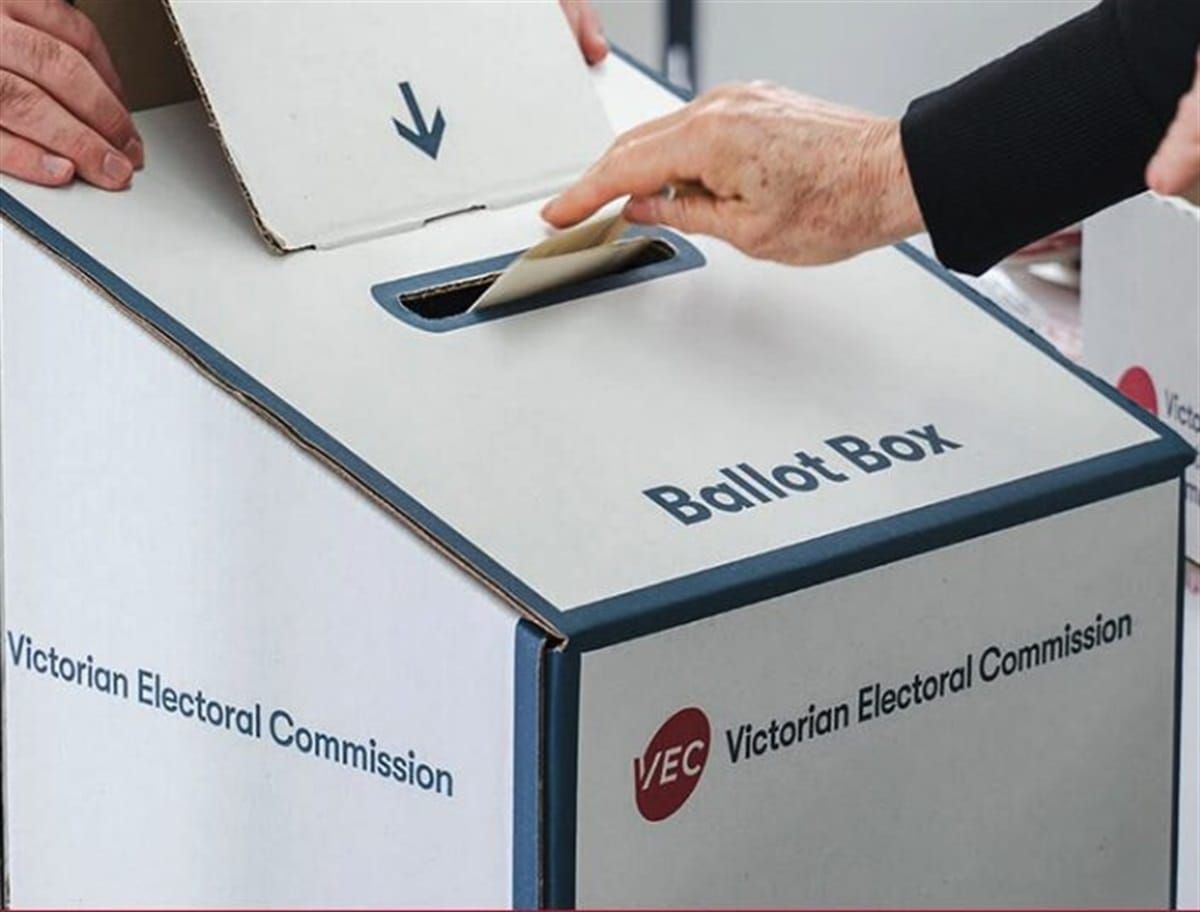
The Prom Coast News asked the lower house candidates standing for Gippsland South to respond to two questions prior to the upcoming state election on 28 November. Firstly, “What are locals telling you is the biggest issue facing the Prom Coast and South Gippsland and how would you address it?” And secondly, “concerns about social cohesion and increasing political tribalism have been raised across the community in the wake of the attack on Federal MP Helen Haines. How do you think elected representatives can help rebuild trust and reduce division in regional communities?”
Their answers are presented in the order that they appear on the ballot paper: Amy Barry-Macaulay, Australian Labor Party, Jessica McAuliffe, Animal Justice Party, Danny O’Brien, The Nationals, Phillip Schuhmann, Independent, Zave Evans, The Greens, Lachie McGennisken, Victorian Socialists (did not respond) and Bianca Wilkie, One Nation Victoria.
Amy Barry-Macaulay
Australian Labor Party

Question one
Cost of living has kept coming up. I get it; as a working mum of young children, with a partner also working part-time, we too are dealing with increasing costs.
The Carroll Labor Government has committed to several initiatives to alleviate cost of living pressures including, capping public transport fares and road tolls, 20 free dental clinics with ten in regional Victoria. Measures already introduced include half priced public transport and car rego reimbursements. If elected, I would work with my colleagues to further reduce cost of living pressures.
I would push for local jobs creation and support for Gippsland industry. There is a huge opportunity for local manufacturing to support the renewables sector; this would see more jobs and a boosted local economy. Importantly, we must protect essential services – the last thing we want is the Liberal-National plan to ‘Americanise’ our healthcare, which will mean huge medical bills for everyone.
Question two
Promoting and protecting social cohesion is central to the core values of the Labor party, which are social justice, equality, inclusion and fairness. However, rebuilding trust and reducing division will require a non-partisan approach and commitment from across all political parties and politicians.
I agree that these concerns need to be addressed and should be on the agenda post-election. Everyone involved in politics needs to work together and agree to a new way forward; one that is guided by principles of respect, equality, inclusion and fairness.
Jess McAuliffe
Animal Justice Party Victoria

Question one
Locals are telling me the biggest issue is keeping the Prom Coast and South Gippsland safe and liveable.
The state of our roads impact everyday travel, access to services, and safety for both people and wildlife. From the Animal Justice Party’s policies, our transport approach focuses on reducing harm caused by vehicles, roads and internal-combustion engines, and supporting a shift away from road-dependent transport. That means prioritising safer, lower-impact transport options (including public and active transport) and ensuring transport and infrastructure decisions properly account for impacts on animals, habitat and the environment.
Locals are also raising family and domestic violence as an urgent issue. AJP supports better-funded refuges that can accommodate victim-survivors, children and companion animals, and improved cross-training and collaboration between police, services and veterinarians.
Question two
Elected representatives rebuild trust by listening publicly and respectfully, and being consistent and transparent—especially when there’s disagreement. Practical steps include holding regular community forums, responding clearly to constituent concerns, and modelling zero tolerance for harassment and political violence.
The Animal Justice Party also sees reducing division as linked to meeting core needs that drive resentment and insecurity: safe housing, accessible healthcare (including mental health), and resilient emergency and disaster responses—particularly as climate disasters intensify. Investing in community resilience and services, and treating people with dignity across political differences, helps reduce “us vs them” thinking. Representatives should collaborate across party lines on shared regional priorities and communicate honestly about what can and can’t be delivered, and why.
The Nationals

Question one
While the cost-of-living and government debt are high on most people’s lists of concerns, the issue I hear about most locally is the state of our roads. People rely on them every day to get to work, take their kids to school and get to appointments. They’re fed up with dodging potholes and seeing the same stretches of road patched again and again.
The Nationals and Liberals will invest $5 billion over four years in road repairs and preventative maintenance. We’ll bring back the Country Roads and Bridges Program so councils like South Gippsland Shire have dedicated funding to fix the local roads and bridges people rely on.
I’ve campaigned tirelessly on the condition of our roads in Parliament as your local member. In government, I’ll ensure South Gippsland to get its fair share of road funding and for repairs that last.
Question two
I condemn the attack on Helen Haines. No one should face violence or intimidation for serving their community. People should be able to ask hard questions and disagree openly. As a local MP, I aim to keep those conversations respectful by listening, taking people’s concerns seriously and being upfront about what I can do.
I make a point of being easy to reach. You can text or email me, stop for a chat at a local pop-up (as I did in Foster last Friday) or book a time to see me when I bring my mobile office to your town. If you raise an issue with me, I’ll follow it up and let you know where things stand.
I pride myself on being able to work across the political divide. I don’t apologise for holding the Labor Government to account - ferociously sometimes - but I’ve been able to work with Ministers to get things fixed locally, time and again, because I’m respectful and focussed on the needs of my community first and foremost.
Phillip Schuhmann
Independent
Question one
People are telling me that they are fed up with the government doing their own thing and not doing what the people want. The people are sick and tired of government corruption and blatant misuse of tax payers’ money. The state of our roads being an obvious issue. I would start by disbanding Rural Roads Victoria. The waste of money is staggering. Then I would have the recipe for the tar returned to what it was before it was changed. Vicroads roads would be built or repaired to a much higher weight rating and shire roads would be maintained rather than patched when the shires are made aware. To end the corruption in government requires an open book approach. All contracts and tenders to be publicly scrutinised and contractors held to their quotes. No cost blowouts. All lobbying to be done on camera and available for public scrutiny.
Question two
Rebuilding trust in government, as it has been lost, requires accountability. Retrospective accountability. The people need to see politicians and bureaucrats prosecuted and imprisoned for their actions and behaviour. Fully transparent accounting of tax payers' money. Violent crime, home invasion and theft need to be punished instead of being let out on bail and allowed to reoffend. Less revenue raising and more enforcing our safety of person and property. The courts are responsible for this and need to be held to account for their decisions. Division has occurred due to deliberate government misinformation predominantly relating to the efficacy of industrial wind and solar installations, "climate change" and "cultural diversity". To fix these issues the elected representatives need to release the cold hard facts about these issues and provide accurate non-biased options of redress by changing police and court directives, environmental policies and multi-cultural objectives.
Zave Evans
Australian Greens

Question one
Cost of living, undoubtedly. There are a number of things to consider, expanding healthcare, building more public housing, breaking the grocery cartel of Coles and Woolworths, public ownership of energy infrastructure and capping wholesale prices, expanding our public transport network, regulating our utilities, and breaking up corporate monopolies to name a few, but I think the most important step is to explain how we're going to pay for it, which is quite simply, taxes.
The banks make about $30 billion each year. A quarterly levy of 0.1% on Victoria's share of bank liabilities would generate over $3 billion a year, enough to fully fund our school system twice over. Double the existing royalties on coal and gas, tax the ultra wealthy, tax property developers, and this alone would reduce the government's debt and inflation, and we could then use the revenue to fund all of the services our society needs.
Question two
We seem to have found ourselves in a time where our politics are deeply intertwined with our identities. When our identities are under attack, compromise feels like surrender. MPs can add to this pressure, and there are steps MPs can take to reduce tension in the conversation and make it clear that as politicians we are standing for or against a set of policies, not a group of people, but I think it's largely up to us as individuals in our communities.
Disagreement shouldn't be destructive. Political tribalism is not inevitable, and we need to find ways to have the uncomfortable conversations with each other and see our opponents as humans, rather than political enemies. It is our values that shape our beliefs, and while we have different ideas on what those values might mean in a practical sense, our values, we largely share, and it's important to remember that.
Bianca Wilkie
One Nation Victoria

Question one
Everywhere I'm going I'm hearing frustrations from locals that regional communities are tired of being overlooked. Whether it's the rising cost of living, deteriorating roads, access to healthcare or increasing pressure on farmers and small businesses, people are frustrated and feel they are working harder and they're paying more while receiving less.
Personally I believe healthcare access and equality is a major concern. Having worked in emergency healthcare, nursing and community support, I've seen what happens when people can't access the care they need close to home. We need to invest in our regional healthcare workforce, improve recruitment and retention, and put greater emphasis on early intervention rather than waiting until people reach crisis point.
I'm also hearing significant frustration about renewable energy developments, planning decisions and the lack of genuine community consultation. People don't feel heard and feel dismissed by the current government members but they deserve to have a say in what happens in their own backyard.
Question two
There is absolutely no place for violence, intimidation or threats in politics, regardless of someone's political beliefs and regardless of political affiliation, every elected representative and member of the community deserves to feel safe expressing their views. What happened to Helen Haines is deeply concerning, and nobody should feel unsafe simply because they hold a different opinion. I think one of the biggest problems in politics today is that we've lost the ability to disagree without turning it into something personal.
I've spent much of my working life in emergency healthcare and supporting people through difficult situations. You don't get to choose who needs your help based on their beliefs, background or political views. You treat people with respect, you listen and you do your best to help them. I don't see why politics should be any different.
I also think politicians need to take some responsibility for the division we're seeing. People are tired of the constant arguments, political games and finger-pointing.