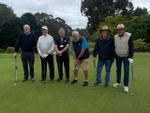
Imagine playing golf in Foster with your mates on a perfect autumn Saturday. One of them calls: “Watch out!” and, thinking swooping magpie, you duck, only to be confronted with a mature deer hurtling towards you across the fairway. The stag continues on its way over the fence into the fortuitously vacant Primary School.
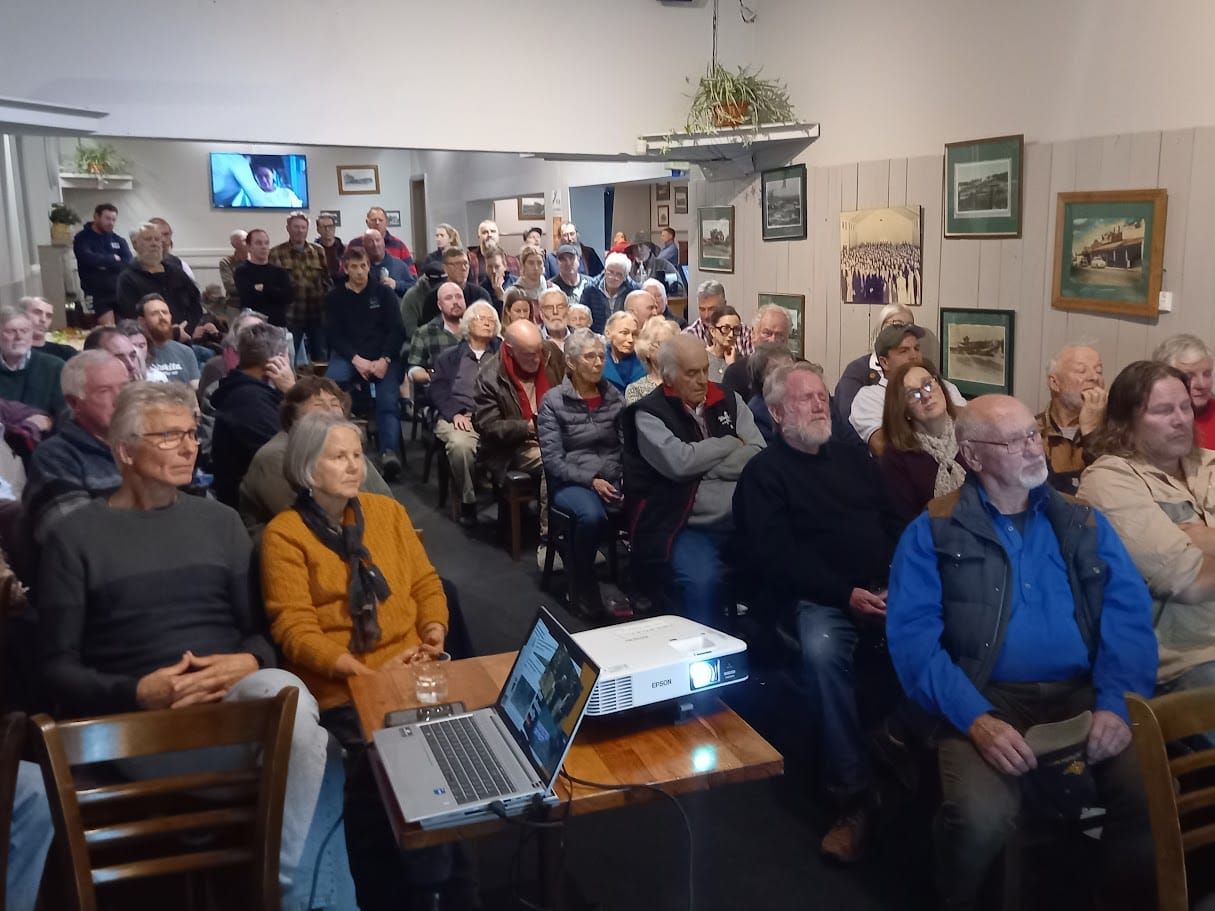
This encounter with a sambar stag, with a full set of antlers, a body size around that of a jersey cow and weighing over 300kg, was recounted by Dave Hutchinson of Mt Best at the South Gippsland Feral Deer Forum in Meeniyan on 26 May.
The forum was convened by the South Gippsland Landcare Network (SGLN) in partnership with the Invasive Species Council (ISC) and Victorian National Parks Association (VNPA). It was promoted as an opportunity for the community to share ideas and learn more about how to support a campaign to end Victoria's feral deer crisis, and, hopefully the deer obstacles on the golf course!
John Kelly from the ISC told the sold-out event in Meeniyan that there are up to one million feral deer in Victoria (the largest population in Australia), made up of four species: sambar, fallow, red, and hog. Collectively, they are having a growing impact across the state, including competing with livestock for feed, damaging fences and crops, degrading waterways and the environment and as a significant biosecurity risk.
He continued that the current overly bureaucratic, small scale and fragmented control programs are having little impact on the exploding deer numbers, which are growing at up to 50% per year. His organisation and others are leading a community campaign to change the Victorian Wildlife Act (1975), which protects deer as game animals, a hangover from colonial times (this is not the case in other states).
What is even more astounding is that in Victoria people can only shoot hog deer, which are primarily located along the South Gippsland coast, during the month of April (the government specifically says this "is timed to minimise impact on breeding productivity"), and can only shoot one male and one female deer per person. Landholders who want to shoot more to control the population on their land must get permission from the government to do so and this permission is often denied.
John Kelly and Jordan Crook from VNPA see the way forward as improved engagement with and resourcing of communities across the state to coordinate deer management in a systematic way. This could mean facilitating a partnership approach between government, contract and recreational deer shooters, harvesters and landmanagers across public and private land.
Jillian Staton, Chair of the SGLN, said that community landcare is in many ways ideally suited to provide this facilitation, but because of the protected status of deer, the organisation cannot access funds to help coordinate deer control as it can for declared pest animals like rabbits and foxes. She said that her local volunteer-run community deer management group at Cape Liptrap has been highly successful in controlling deer on private land but needed resourcing to continue.
The value of community landcare in facilitating local pest plant and animal control was encapsulated by Peter Walsh from Koonwarra, who noted that these grassroots efforts have shown for nearly 40 years that they effectively leverage government funding, benefiting both the community and environment. Kaye Rodden