With Pat O'Malley
Dirty Nesters
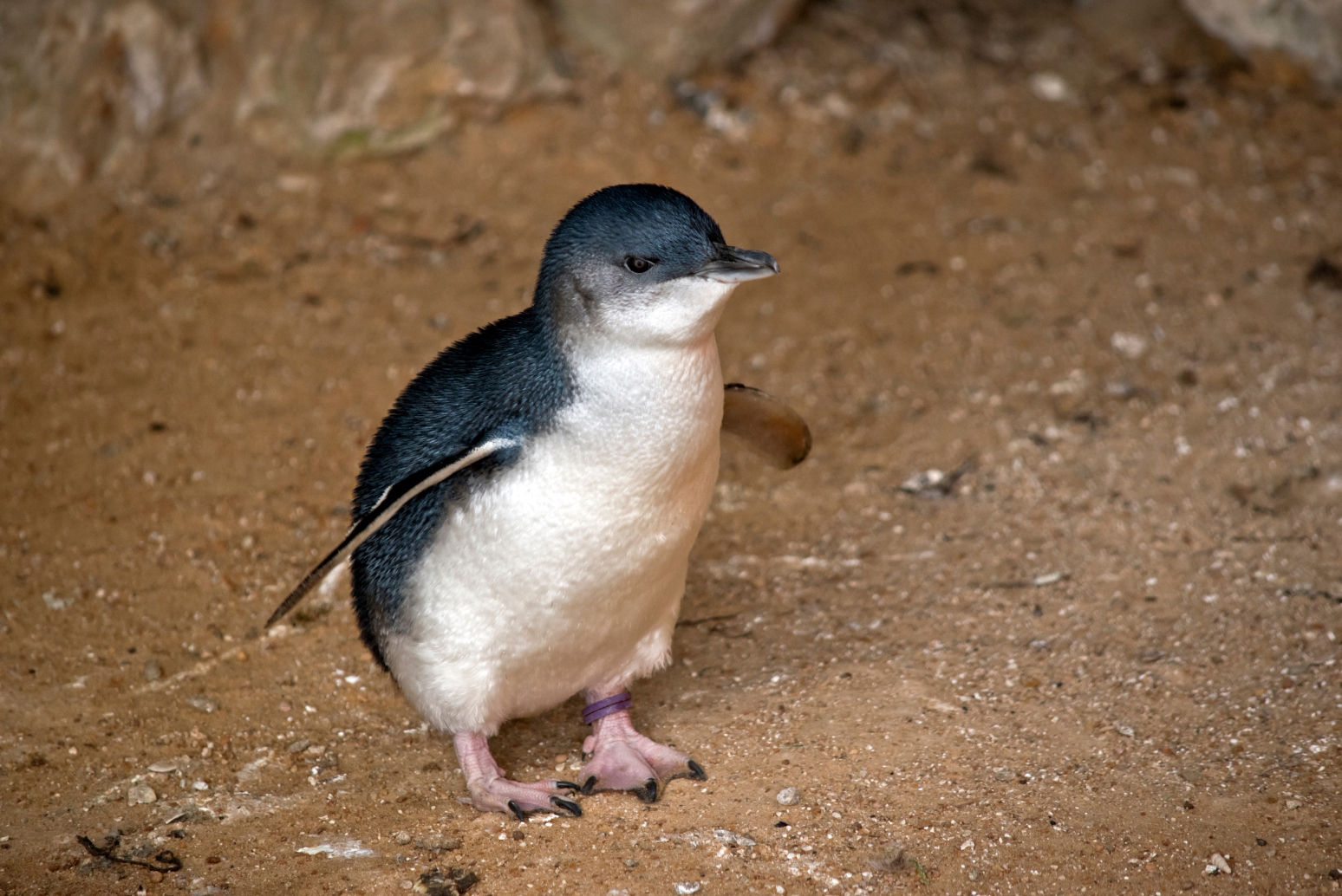
A long while ago, before the Little Penguin colony on Phillip Island became a pricy tourist theme park, a mate and I went camping in the dunes. During the night a dreadful din set up outside the tent, which in the morning revealed itself as an angry penguin. We’d camped over the burrow. As far as I'm aware Little Penguins are the only burrowing penguin, but plenty of other bird species burrow into dirt.
Phillip Island is, of course, home to a huge burrowing colony of Short-tailed Shearwaters. Called ‘Mutton birds’ because they were (are) eaten for meat, I tried them in New Zealand where you could buy them in butcher shops. Don’t bother.
The beautiful little Striated Pardalotes, very common around here, prefer to burrow into sand banks. Rainbow Bee-eaters do the same, while our Kingfisher species either burrow into termite nests, or into muddy banks. Unlike hole nesters, such as Kookaburras and Crimson Rosellas, tunnelers are not reliant on the declining number of old, hole-bearing trees.
Tunnels have several other advantages – protecting nestlings from wind and rain and from many predators, and tunnels are protection against extremes of temperature. Indeed, a couple of our tropical parrots, the Hooded Parrot and Golden Shouldered Parrot nest in termite mounds precisely because these are engineered by termites to be cool inside. Ironically, our local Noisy Miner doesn’t dig.
Other birds build mound nests. Lyrebirds do build mounds, but the mound most of us associate with these birds is the stage upon which the male struts his stuff. However, the nest, constructed out of sticks and placed near the ground, is camouflaged to appear like a mound of forest litter.
We have no true mound nesters on the Prom Coast; our nearest mound builder is the Mallee Fowl. Mound nests are constructed out of dirt and leaf litter, and as they compost, they generate heat. The eggs are buried, and the temperature regulated by the addition or scraping away of materials – the temperature tested by the adult sticking its tongue into the mulch. No boring hours sitting on the nest – indeed, mound nesters are rotten parents: the chicks must dig themselves out and then look after themselves. Even nearby parents ignore them.
That leaves mud nesters. Several of our local species build nests totally or largely out of mud. The most familiar is the Mudlark or Australian Magpie Lark, but probably the most interesting is the White-winged Chough. Dumpy, mostly black, and often seen in mobs by roadsides, these birds are a hoot. Well-known for kidnapping the young of other mobs (who seem quite happy to be carried off), they chatter and whistle and do just about everything together. Notably, they cooperate in building large cup-shaped mud nests which are often the recipients of eggs from several females and most of the family share a role in incubation and feeding the young.
They seem to really enjoy each other’s company. But they aren’t to be messed with: near Bendigo I saw a fox running for its life, pursued by a mob of White-winged Choughs.