A Victorian parliamentary inquiry into public school funding has found that government schools across the state have been systematically underfunded for more than a decade, and local advocates say the per capita funding model is creating particular hardship for small communities like those on the Prom Coast.
The Legislative Council Legal and Social Issues Committee tabled its final report in April 2026 after finding that Victorian government schools have only been funded at around 90 per cent of the recommended Gonski amount since 2018. The state committed to funding schools at 75 per cent of the Schooling Resource Standard with the Commonwealth covering the remaining 25 per cent, but the committee found uncertainty remains about when Victoria will actually reach that target, with references in government documents to three different dates: 2028, 2031 and 2034.
The committee has recommended the Victorian Government state unequivocally when it will reach its funding commitment, calculate how much it has underfunded government schools since signing its bilateral agreement with the Commonwealth in December 2018, and compensate the school system accordingly.
For communities like the Prom Coast, the funding model creates a problem that goes beyond the statewide averages. South Gippsland Greens candidate Zavier Evans, who met with the Parliamentary Secretary for Education to discuss the issue, said the per capita approach fails small regional communities in ways that simply do not arise in larger urban areas. Funding flows based on student numbers, which means a community of fewer than 1,000 students absorbs the impact of new arrivals far more acutely than a city school. "It's not an issue when you have 10,000 kids in an area to add 100 more," Evans said, "but 1,000 plus 100 is massive."
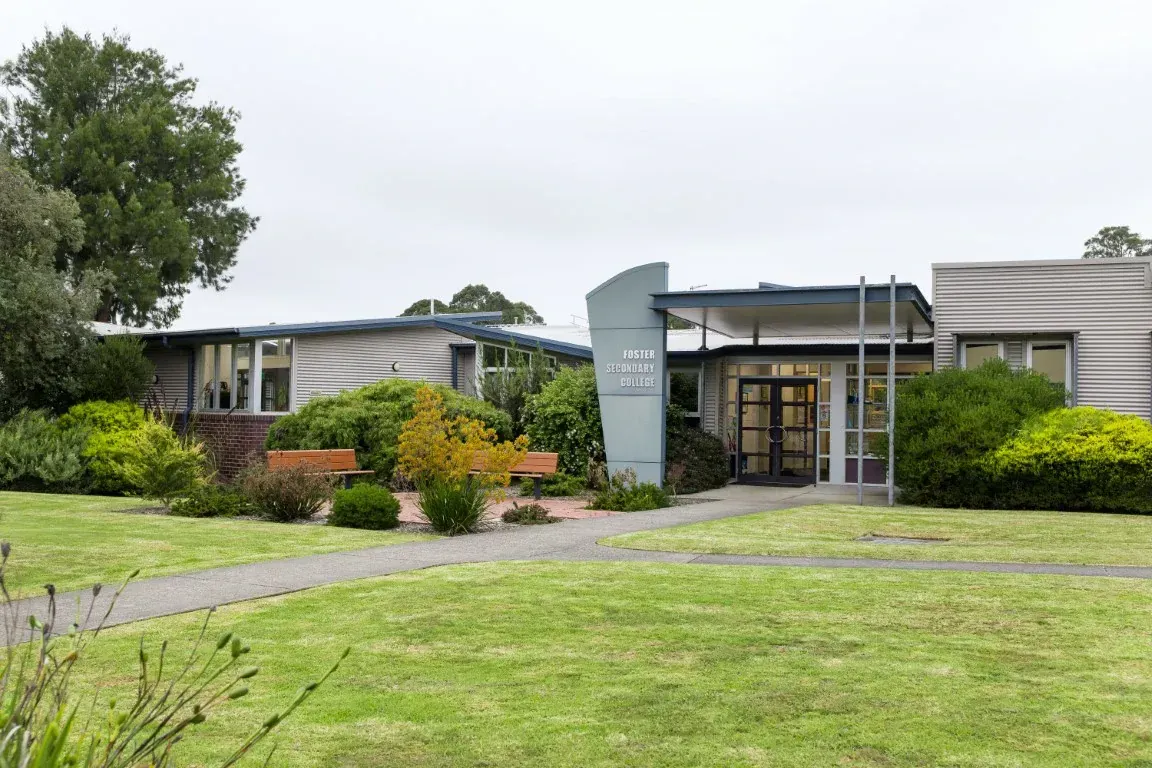
The practical consequences are already visible locally. Foster Secondary College has a room full of asbestos that has been sealed off for years. Under the current funding model, the community is effectively being told to either fundraise for removal itself or wait decades for the money to arrive through normal allocation processes.
Evans also raised the need for group housing for teachers in regional areas, similar to models built for health sector workers in places like Wonthaggi, as a way of addressing the teacher shortage that compounds the funding problem in small schools.
The committee's chair, Joe McCracken MLC, said the findings reflected a decade of accumulated failure. "Our teachers and students deserve better than what we have given them. Public schools have been forced to delay improving both their staffing numbers and infrastructure. These ongoing effects can be ameliorated through access to the funding that they have been denied."
The Victorian Government has six months to respond to the committee's recommendations.