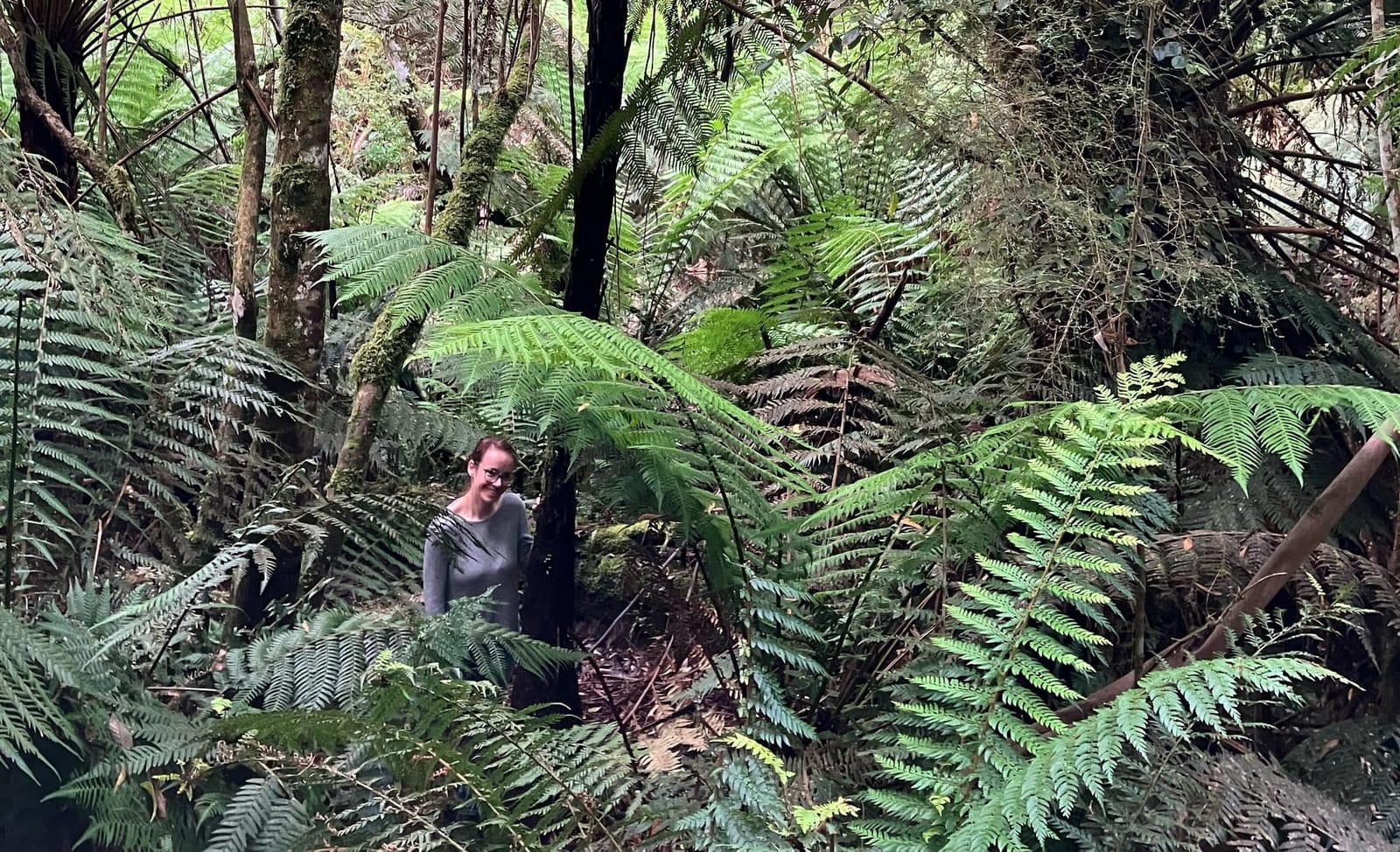
With Stuart Inchley
Skirting extinction: Turtons Creek’s secret world of rare tree-ferns
Most people know Turtons Creek as the heartland of the critically endangered Slender Tree-fern, but what many don’t realise is that it’s also the stronghold of one of the rarest and more interesting ferns we have: the Skirted Tree-fern.
You can spot them by their distinctive “skirts”, where old dead fronds stay attached around the trunk instead of falling away. The fonds create sheltered, humid spaces packed with mosses, fungi, insects, spiders, and even other ferns growing on them. I like to think of each skirted tree- fern as a hotel for forest life, complete with climate control and long-term tenants.
What still amazes me, even after years of walking these gullies, is that in one short stretch of Turtons Creek I can find Slender Tree-ferns, Skirted Tree-ferns, Soft Tree-ferns, Rough Tree-ferns, and have even found the King Fern with its prehistoric fronds. Most Victorians would have to travel all over the state to see that sort of diversity, but in South Gippsland it is here in our back yards.
The Skirted Tree-fern, Cyathea marcescens, a hybrid between the Slender Tree-fern (Cyathea cunninghamii) and Rough Tree-fern (Cyathea australis) is only found where both parent species are found together. Recent surveys in Turtons Creek have added another 70 to the 221 known individuals in Australia.
I was fortunate to learn more about them from ecologist Karl Just, who has spent decades studying these gullies. I asked him why the Skirted Tree-fern was not listed as critically endangered like the Slender Tree-fern.
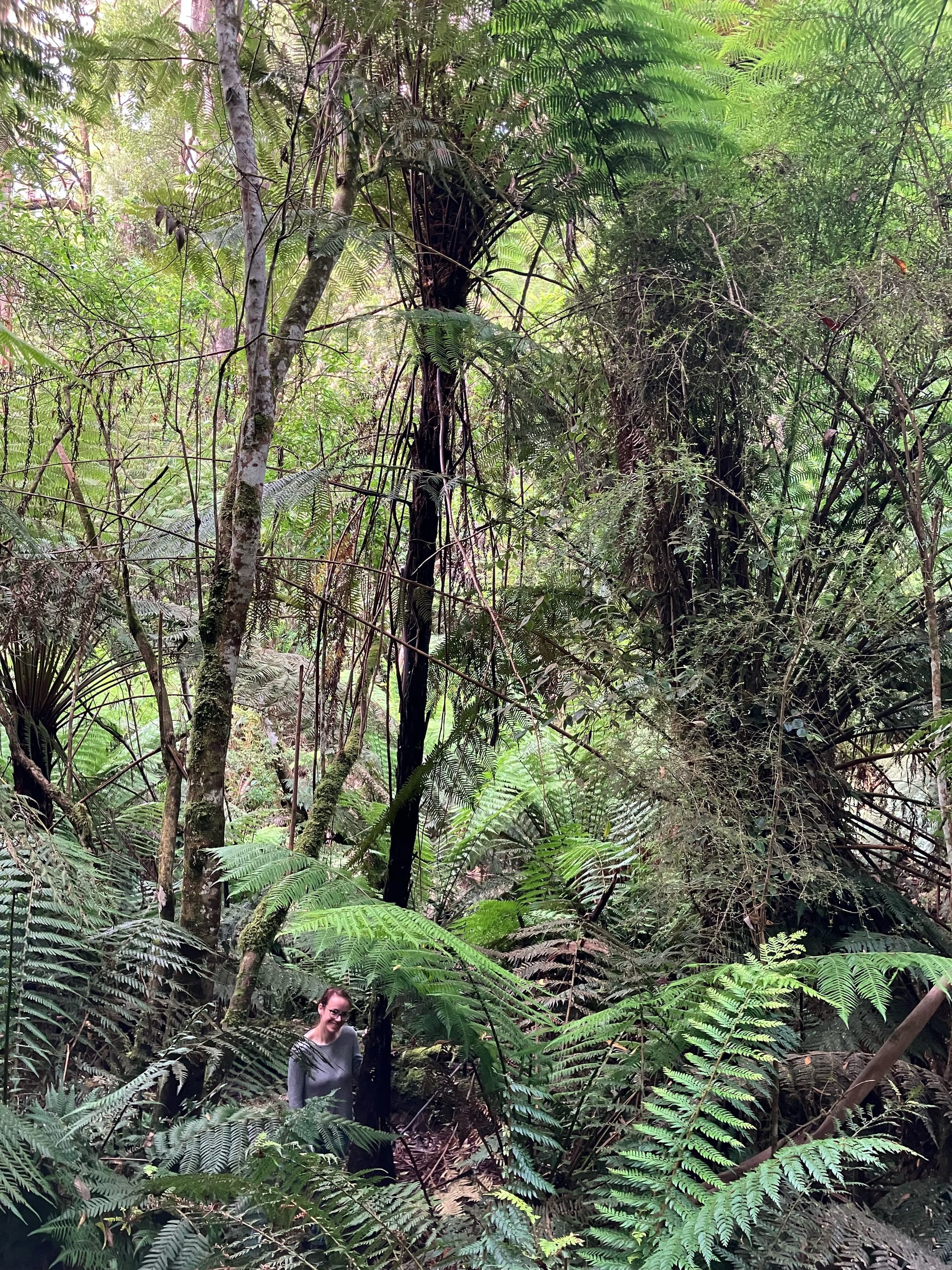
Karl explained that hybrids are rarely listed in Victoria because they don’t form self-sustaining populations, but they possibly should be - as hybrids are an important part of the evolutionary story in these fern gullies. They show how species adapt, diversify, and persist under extreme and changing conditions and can sometimes lead to new species over time. They’re a sign that these gullies have stayed stable and functional for millennia.
Turtons Creek isn’t just scenic. It’s a living record of deep time and resilience.
For me, it’s not just about the science. It’s about how this place feels. There’s a moment when you drop into a steep rainforest gully, the wind drops and it becomes very quiet, the temperature suddenly cools, the light softens, and you hear water trickling down the creek. It is like you have stepped through a portal back in time...back 60 million years to Gondwanaland! Then you look up and there’s a Skirted Tree-fern standing there, fronds askew. You don’t need to know Latin names or evolutionary theory to feel the power of that.
Tree-ferns in general do a lot of quiet, practical work that rarely gets talked about. They stabilise steep slopes, trap sediment during heavy rain, and hold moisture in the soil. Their fibrous trunks act like living sponges, soaking up water and releasing it slowly back into the gully. The dense fronds shade the ground and keep temperatures down during heatwaves.
That matters more than ever in a fire-prone landscape. Fern-rich gullies act as natural fire refuges for animals during bushfires. Their high humidity, shaded ground, and moisture-laden trunks can slow the spread and intensity of fire. Instead of becoming fuel, ferns reduce fire risk and help landscapes recover. They’re part of nature’s own fire management system, shaped over millions of years.
The Skirted Tree-fern sits right in the middle of all this. It tells a story about forests that are ancient and evolving, and about gullies that stay cool and wet, providing habitat and protection when the surrounding ridges dry out and are threatened with fire… yet another reason why Turtons Creek is so special!
My hope is that by recording and monitoring these stunning ferns and by sharing what makes this place special, we can get better protection for them and to see them thriving in the creeks and gullies of South Gippsland for generations to come.