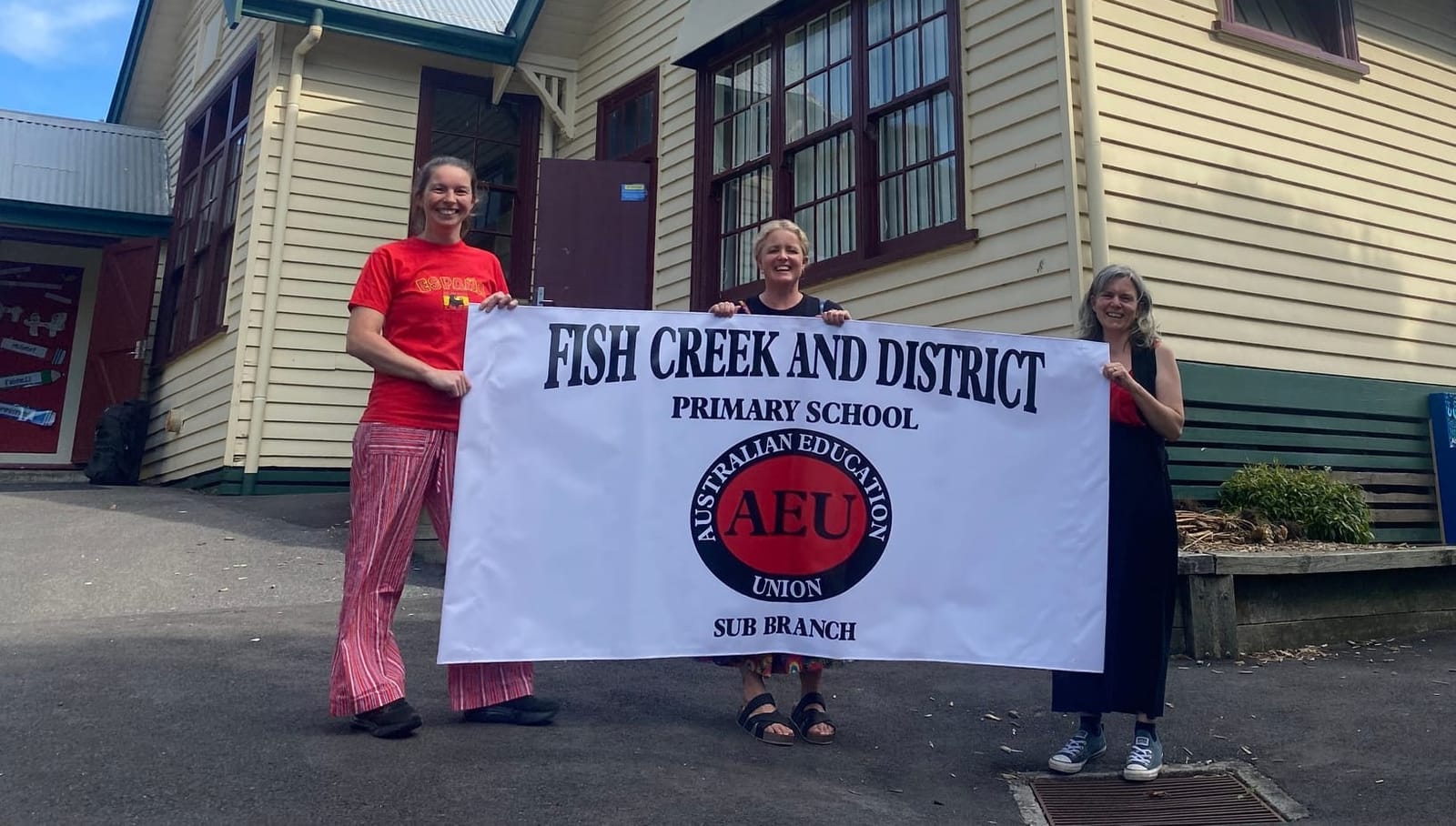
Local teachers join statewide strike over pay and workload
At a swim meet in Melbourne with her daughter last Sunday, local teacher Donna Gillam looked around the crowd and noticed something that told her everything about the state of her profession. Three of her friends, all teachers at Gippsland public schools, had their laptops open, catching up on work in the stands.
"Teachers already do so much for free all the time, because we care about the kids and the families, but it's really hard," said Gillam, who serves as a union representative at both Meeniyan Primary School and Fish Creek and District Primary School.
Gillam was among thousands of Victorian teachers who stopped work on Tuesday 24 March, joining a statewide strike for the first time in 13 years after eight months of failed enterprise bargaining negotiations between the Australian Education Union and the Victorian Government.
The AEU is pushing for a 35 per cent pay rise, citing excessive workloads, unpaid overtime and a growing shortage of teachers, particularly in regional areas, where educators can earn up to $15,000 less than their counterparts in NSW.
The Victorian Government put forward an offer of around 17 to 18.5 per cent, depending on how allowances are calculated, but the union rejected it, saying it fell short on both pay and conditions.
For Gillam, it's not good enough. She said the government's offer also removed time in lieu entitlements and added an extra hour of compulsory meetings, making an already heavy workload even harder to manage.
On Tuesday she travelled to Melbourne with her kids to attend the rally, wearing red in solidarity with striking colleagues across the state.
AEU Victorian Branch president Justin Mullaly said teachers had been left with little choice. "Teachers, education support staff and school leaders will go on strike. They don't want to do that but they're left with little choice."
Education Minister Ben Carroll described the state's offer as "compelling and significant" and urged the union to prioritise dialogue over disruption, saying he remained willing to continue negotiations. Cara Schultz