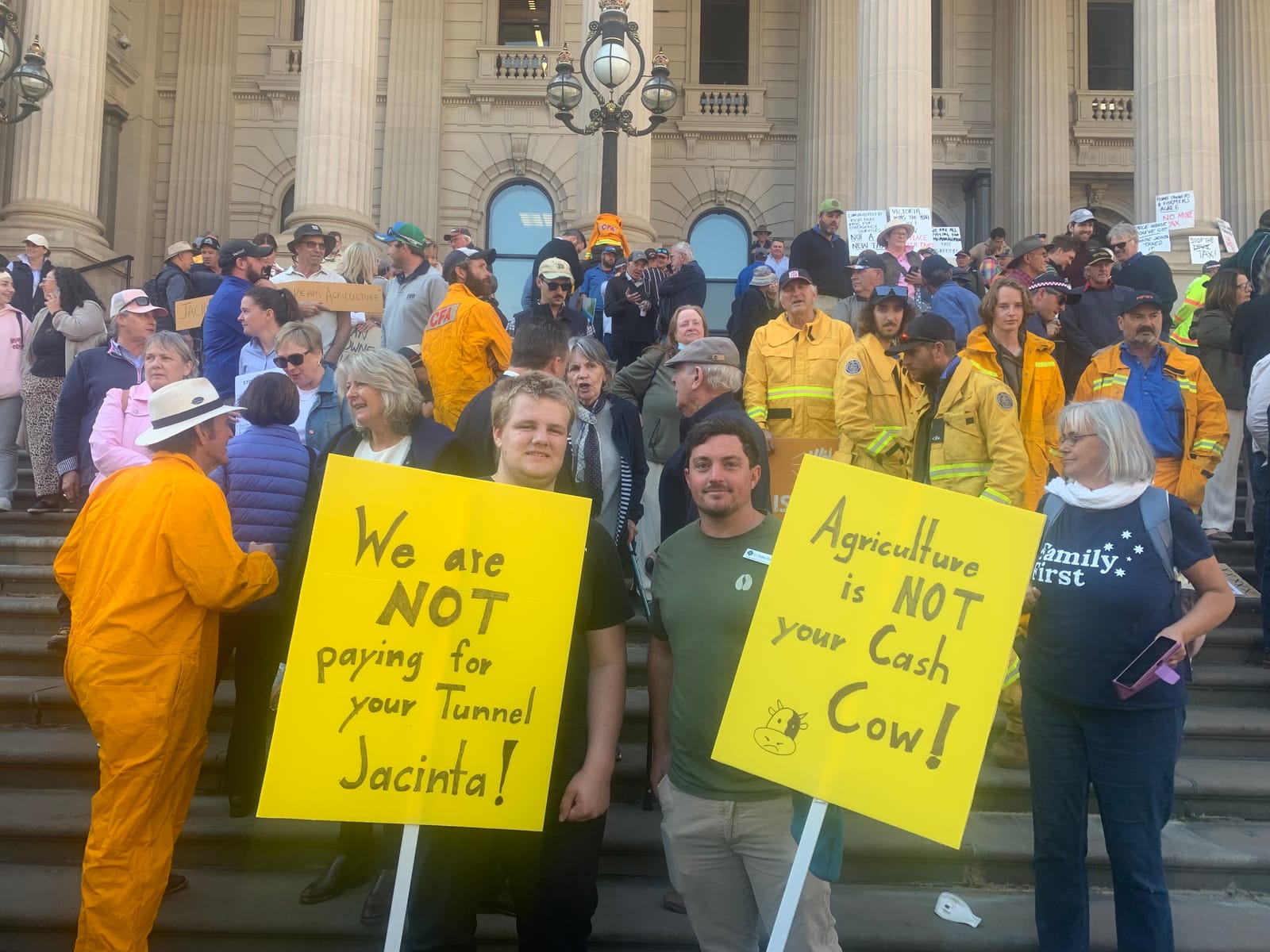
The Victorian government has frozen the controversial Emergency Services and Volunteers Fund (ESVF) levy for farmers for a further two years, following strong advocacy from South Gippsland Shire Council and regional communities.
South Gippsland Mayor Nathan Hersey welcomed the decision, saying Council has been firm in its opposition to the inequitable burden the levy places on primary producers and rural communities.
"While we fully support and value the vital work of our emergency services, we cannot support the inequitable burden the ESVF places on primary producers and rural communities," Mayor Hersey said.
"It's good to see that the Victorian government has been listening to the strong advocacy of South Gippsland and Gippslanders more broadly. We welcome the additional deferment and hope that during this period the proposed increases and method of the ESVL can be reconsidered in the interests of all Victorians."
The ESVF, which replaced the fire services property levy last year, had attracted particular anger in the Prom Coast and throughout regional Victoria, with farmers facing potential increases of tens of thousands of dollars.
Victorian Farmers Federation President Brett Hosking told the ABC that the two-year freeze was good news and would save the average farmer tens of thousands of dollars. "This shows the government is listening which is a really positive step, but we're not there yet."
Treasurer Jaclyn Symes said the levy for farmers would be frozen at the present level with no plans in forward estimates to reinstate increases anytime soon.
"Victorian farmers told us the Emergency Services Volunteer Levy was their number one issue, and we've been moving heaven and earth to get to today's decision," Ms Symes said.
She thanked the VFF for their advocacy and the numerous farmers who had provided direct feedback about how the levy was affecting them.
The government has also increased the cap for CFA volunteers claiming an ESVF rebate for their farms from $5 million to $10 million on capital improved value, increasing the maximum rebate eligible volunteers can receive. The levy had been forecast to collect $1.62 billion this year, a figure now revised down to $1.55 billion. Cara Schultz