With Zavier Evans
Potty about potoroos
More than half the cells in your body don't belong to you, and contain none of your DNA. In many ways, a human individual is just a substrate for an enormous bacterial colony. When you kiss someone, some of their microbes will enter your mouth. They will colonise you, and become a permanent part of your microbiota. Due to the gut biome's role in serotonin production, they will have an effect on your emotions, and thus your experience in life and your identity. When you die, they will digest your corpse.
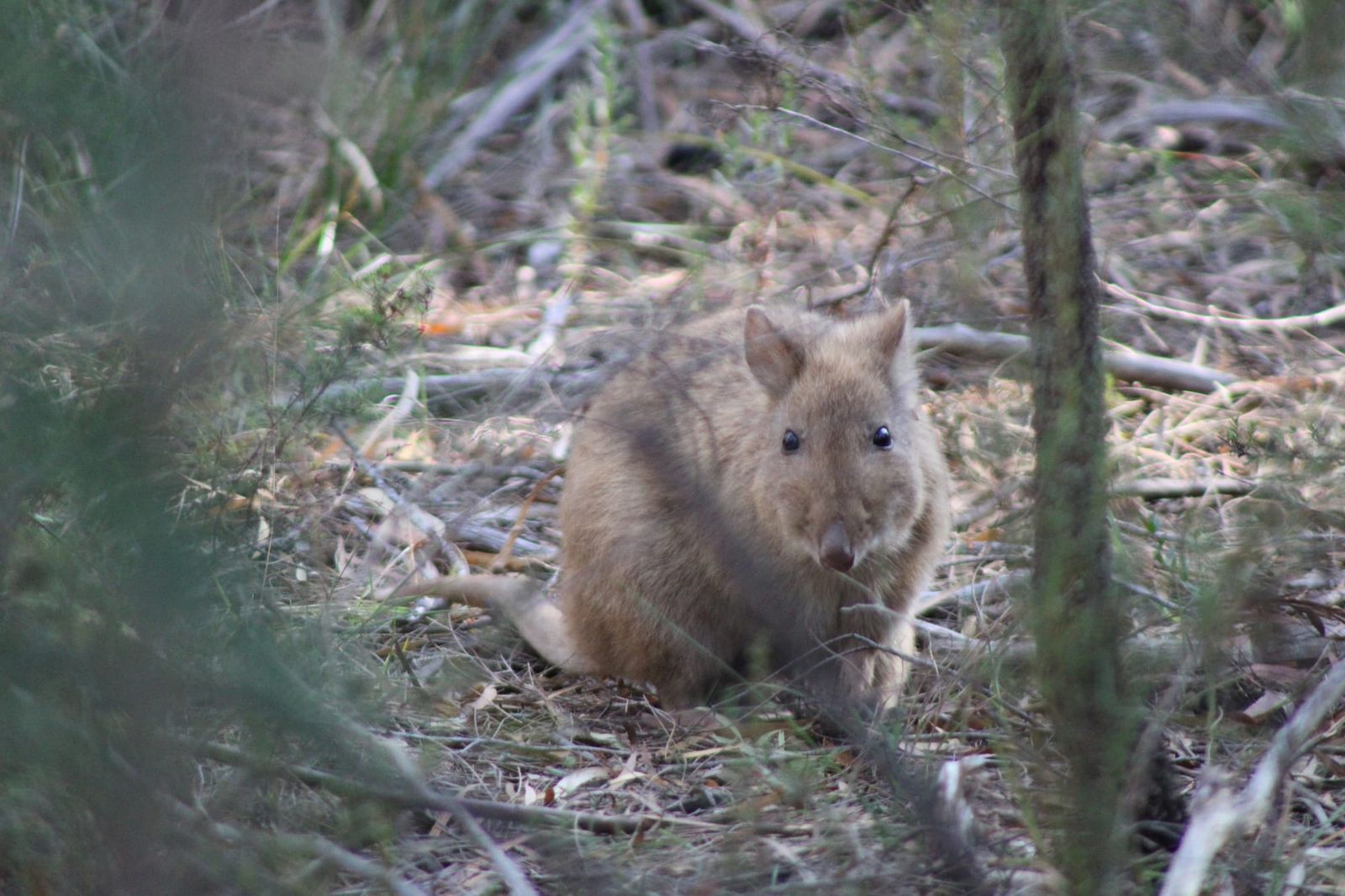
Many of the smallest members of the kangaroo family (lovingly nicknamed ‘rat kangaroos’, and as closely related to kangaroos as bears are to dogs) are obligate fungivores. Potoroos, for instance, are a creature who spend their time fossicking around the roots of eucalyptus trees to sniff out the underground fungi responsible for nutrient cycling. They cannot digest this fungi, yet it constitutes up to 90% of their diet. Curious, isn't it?
Of course, I'm embellishing a little here. These species do get most of their nutrition from fungi, but they cannot digest it directly. The fungi they consume are largely made up of structural carbohydrates like chitin, which are difficult to digest (humans have a specialised enzyme for this, which is why we can digest mushrooms, though not very efficiently). The potoroo’s stomach however, is large, and often partitioned, containing an initial chamber (the forestomach) in which microbial fermentation breaks down the cell walls of these fungi. These microbes are dependent mutualists. They couldn't exist without their exceedingly cute hosts, and so too are the potoroos dependent on the microbial colonies, for after the microbial fermentation occurs, the microbial colony grows, and the potoroos then digest the microbes themselves.
The nutritional journey ends here, but there is of course, an important waste product. The spores of these fungi are endozoochronous (or inside-animal-time-ous, if you speak Greek, meaning they can pass unharmed through the digestive system of an animal) and the potoroos are something of an ecosystem engineer, taking these spores and depositing them via consumption onto the root systems of other trees in need of mycorrhizal (fungi/root system mutualist) colonisation. This, as well as other things like soil aeration from digging with their specialised claws (potoroos are estimated to turn over 10 tonnes of soil per individual per year, helping the composting of leaf litter and reducing fuel accumulation and bushfire severity), contribute to the overall health of the ecosystem, and directly drive the viability of the habitat the potoroos themselves require.
These incredibly specialised creatures are some of the most likely animals to become extinct in the near future, and they play a crucial role in spreading the spores of mycorrhizal fungi that many plant species are dependent on. Studies looking at the overlap of different fungivore's diets show that each has unique fungi species they forage, meaning when a single species is in population decline, there's a wide scale effect on the whole ecosystem. Research suggests that these species are generally absent from areas colonised with phytophthora cinnamomi, and are prey for introduced predators. This illustrates the compounding nature of the negative effects contributing to the biodiversity crisis we find ourselves in, and the interconnectedness of the issues faced by our vulnerable species. As these species decline, due to myriad (often anthropogenic) influences, their own decline exacerbates the degradation of their habitat, contributing further to changes in the ecological landscape that exacerbate the decline of their populations.
I'm going to try to end on a positive, but the reality for many of our little fungivores is grim. All three species of bettongs are extinct in Victoria, with attempts to reintroduce the eastern bettong having middling success. The Western Australian Gilbert's potoroo is a Lazarus species, meaning it was thought to be extinct since 1900, until a small remnant population was found, but then in 2015 a fire came through and burnt away 90% of its habitat killing all but a few members. In 2022, six individuals were successfully released from two insurance populations and will hopefully survive predation in the remnant patches of habitat. The long nosed potoroo exists in six remnant populations, one of which is in Wilson's Promontory, though the Gariwerd population is in steep decline from post-fire predation after successive bushfires. The one real success story is of the long footed potoroo in East Gippsland. Despite losing around 80% of their habitat in the 2020 fires, they've been making a comeback thanks to a wide-scale predator control and monitoring program and have even been found 17km outside their recorded range, sparking hopes that their populations are expanding. We can take hope in the dedication of our ecologists and conservationists (and ideally support them financially, or encourage our government representatives to), and help by getting involved with conservation efforts and organisations, and by keeping our predator pets out of their rapidly diminishing world.