With Zavier Evans
Hot
Situated roughly 1km from the sun, Australia is well known for being too hot for man and beast, even on occasion, in our own South Gippsland. On these days, where the ozone layer is having some time off, amidst the cracked dirt and wilting vegetation, animals who are unfazed at the prospect of prancing through snow have secret methods of surviving our kiln of an environment.
Firstly, the kangaroo. Roos have sweat glands, but don't use them unless they're exercising, as they would dehydrate in their usually hot, arid environment (tangential fact, red kangaroos have been known to dig over a metre to get to water). Instead, when resting in the heat, they employ a different method of evaporative cooling. They lick their forearms. This sounds ridiculous, but kangaroos have a patch of very thin skin on their forearms covering a dense network of blood vessels that allows for the rapid dispersal of body heat as their saliva dries. And this is just the tip of the rapidly melting iceberg.
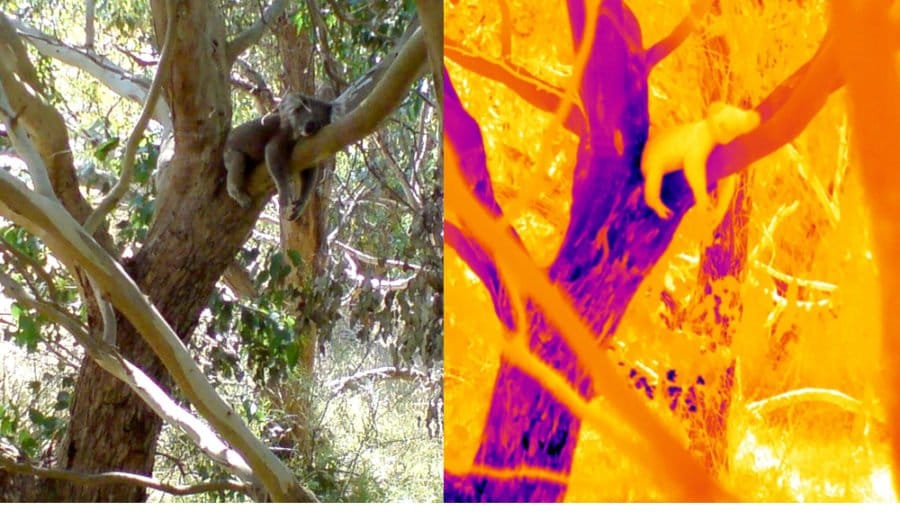
Koalas (thought to be from the Dharug word "gulamany", meaning "No drink") get their water from the inedible eucalyptus leaves they eat, but have been increasingly seen drinking from supplementary water sources in the wake of heatwaves and bushfires. Being stuck up a tree, they don't have a lot of water to lose, meaning when they need to cool down, they elect against evaporative cooling and instead, lay sprawled along the trunk of a tree, as the tree trunks are often much cooler than the ambient temperature. In fact, oftentimes they use acacia trees, which aren't even a food source, because they're even cooler.
The iconic and constantly annoyed-looking Thorny Devil is a master of water retention. Due to the nature of their ant-eating mouth parts, they couldn't drink from a puddle if they tried, though their environment rarely grants them the opportunity. The cracks between their scales are hygroscopic, and use capillary action to channel accumulated water toward their mouths. To drink, Devils simply stand outside at night and let the dew condense on their skin, which then runs in tiny rivulets into their waiting mouths. This also works when they stand in the rain, and in times of desperation they have been known to utilise this by burying themselves in damp sand. That's crazy, but there's perhaps an even odder water saving adaptation. Behold: The Snot Cocoon!
The crucifix frog of inland eastern Australia spends most of its life dormant, underground. It uses a sticky mucous (that zoologists call frog glue) that forms in layers, drying into a kind of skin that remains wet on the inside and covers all but the frog’s nostrils to hold as much moisture as it can, and remains this way metres underground for years at a time. When heavy rains fall, it burrows to the surface and begins its frantic 6-8 week lifespan using a variety of tactics to hunt as much as possible (including pedal luring, where the frog remains motionless and wiggles its toes to attract bugs), before breeding, and beginning the life-cycle all over again.
Bonus facts for reading to the end: Echidnas blow snot bubbles by way of evaporative cooling, and the myth that pelicans expose their spines to cool down isn't true, though this does happen when they yawn. Pelicans use "gular fluttering" to cool, where they flap their bill pouches in the wind.