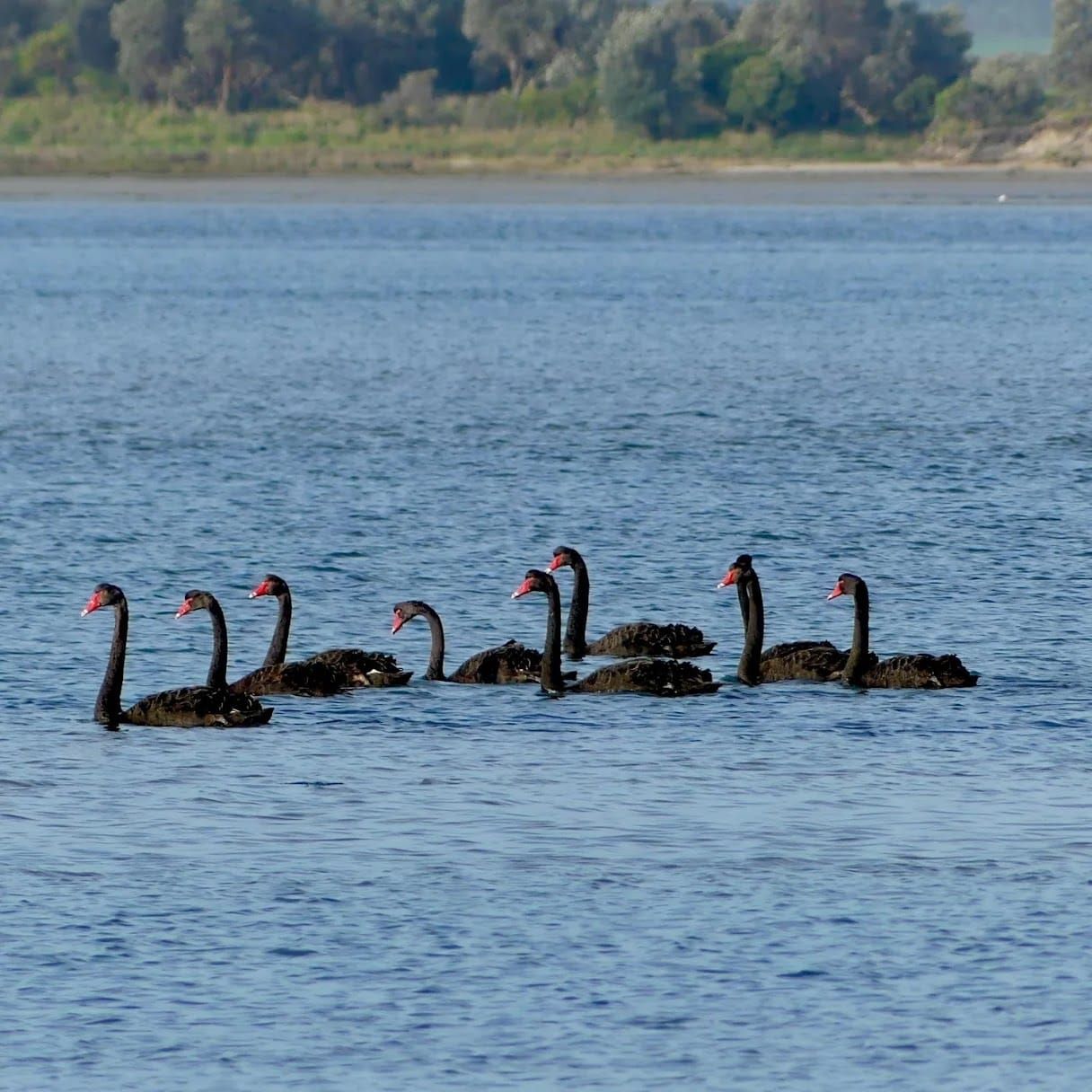
H5 bird flu has been confirmed in South Gippsland, with a positive case in a Greater Crested Tern recorded on 15 August at Hourigan’s Camp Lane, Sandy Point, and several other sick and dead birds reported to the authorities at the Spit at Sandy Point, as well as a Black Swan at Shallow Inlet.
The detection comes as the virus continues to spread across southern Australia, with more than 1,000 dead crested terns discovered across remote islands off South Australia's coast, 28 dead penguins found at the Port of Grassy on King Island in Bass Strait and and a dead long-nosed fur seal in South Australia confirmed as the first marine mammal killed by the virus. Distressing footage of sick and dying birds in Portland in Victoria’s west has been widely circulated, and locals there have reported clearing dead birds off the beaches and coastlines themselves.
Signage has now been erected by DEECA staff at Sandy Point main beach and Shallow Inlet. The signs clearly outline Bird Flu advice for the community, and note that all off-leash dog areas are now closed until further notice.
Local land managers have issued a directive that all dogs on beaches must be leashed, including in the off-leash section at Ned Neales. They note that beach users can still enjoy the sand with furry friends on a lead, and that this is important for the safety and wellbeing of your pet, as well as the wider community.
Chief Executive of the Invasive Species Council Jack Gough told the ABC that the deaths were only the start of what we can expect to see in the months ahead.
"We look at South America, where we're talking hundreds of thousands of birds dead in the first few months and that's the scale of death that we can start to expect," Mr Gough said.
Wildlife in Sandy Point’s (WiSP) Christy Fejer says the positive case at Hourigan’s Camp Lane is particularly concerning because the Black Swans that live in the inlet are considered extremely vulnerable to the disease.
Fejer notes that the local on ground response is being led by a coalition of WiSP members, Birdlife volunteers and other bird enthusiasts and is primarily about surveillance and communication at this stage, with the collective watching for evidence of the disease and spread.
“We try to monitor areas that are not frequented by the public and I know of Two Greater Crested terns that have been reported (but no results as of right now) along greater Waratah Bay. From our local expert and the Regional Birdlife Coordinator they say it is safe to assume it is here. We've been reassured by local authorities that there are plans in place to remove birds. WiSP has offered assistance in whatever capacity and a number of us are in the process of getting Wildlife Victoria registered to pick up sick birds.”
Venusian and South Gippsland Cr Sarah Gilligan paid tribute to local wildlife volunteers at the forefront of the bird flu response at last week’s council meeting, “Right now I'm a bit obsessive with watching the beaches and seeing if everything’s OK…. A big shout out to everybody who's working in that space… and to everybody who's watching this horrible thing land on our shores.”
Sue Mason, from Philip Island Whale Watchers, is asking for care and respect for people working with affected wildlife. “Please also spare a thought for those of us dealing with this firsthand: researchers, wildlife carers, authorities, veterinarians, tourism operators and others whose lives and livelihoods are closely connected to these animals.”
“We work with wildlife because we care deeply about it. Watching populations and individual animals that you know and study potentially being affected can bring a very real sense of environmental grief and helplessness… please remember that there are people behind the science, response efforts and wildlife stories you are reading. Check in on them. Be thoughtful about what you share. And above all, please be kind.”
Authorities have highlighted additional community precautions beyond the standard advice: scavengers and mammals are at risk of infection through contact with infected carcasses; keep dogs on leashes; stop feeding wild birds; and confine backyard poultry while the risk remains elevated.
The Victorian Government has announced a $500,000 funding package for the wildlife sector in response to the spread of the virus, including $250,000 for frontline wildlife rescuers and shelters and $250,000 for Wildlife Victoria. The funding will help carers purchase personal protective equipment and biosecurity supplies, and will boost Wildlife Victoria's emergency response capacity, including advice for wildlife rehabilitators, support for testing and sampling, and access to quarantine facilities.
In another sign that the outbreak has reached a new stage, Victoria has changed its reporting framework to align with national standards, now reporting H5 bird flu events rather than individual detections. An interactive map of confirmed events is available at agriculture.vic.gov.au/birdflu.
If you see sick or dead wildlife, do not touch it. Record the location and call the Emergency Animal Disease Hotline on 1800 675 888.